Chapter Two: The Unparalleled Idea
When three extremely intelligent people get together and decide to create something, you can be sure that this “something” will be exceptional.
I don’t know about you, but I have always wondered how it happens — the birth of a new idea. A person walking down the street suddenly “catches an insight” and quickly and quickly writes it down in a notebook? Or maybe — while talking to a random passerby, suddenly, on an associative level, he realizes — this is THE idea! “Eureka!” — one of everyone’s familiar discoveries, was accompanied by that very word.
Let’s take a look behind the scenes of the Sei Network and see what it was like for the guys who could very well turn the whole blockchain world upside down.
According to one of the founders, Jay:
“My friend Jeff and I started figuring out how we could create something like Robin Hood, only more transparent. The idea was to create an intra-chain derivatives exchange. There are two ways in which this could be approached. Approach number one is to build with AM, approach number two is to build with the order book. We quickly realized that they are far from perfect. For example, concentrated liquidity is like an order book with extra steps added. And then we started researching what a staking order book would look like, because order books are better suited for open-ended exchanges or derivative exchanges of any kind. They just can’t scale on any general purpose chain. They don’t scale on Solana and they clearly don’t scale on Ethereum.
Then it just becomes more difficult to get into your transactions related to, for example, order book cancellations. And we saw this in particular with Solana. Solana was originally intended to be a chain for DeFI. Since Solana started focusing on games and NFT, market makers have become quite frustrated with it because they couldn’t, for example, cancel their order.
We were able to offer deals that many other players can’t do as easily. So market makers and developers were very frustrated. Eventually, given this general dynamic, we realized that there was a huge opportunity to just create a good order book infrastructure. So we stopped building decks and got busy solely with making that order book infrastructure scalable and usable by other teams. If you think about it, most of the L1 states are distributed by the bar. Either they are very general purpose, like Ethereum or SWAM, or they are very specific, like Osmosis and UD. Exploring the middle of this distribution, this kind of unexplored, more DeFi-specific design space, just allows us to explore a lot of entirely new areas of the design space, especially related to the design of our book.
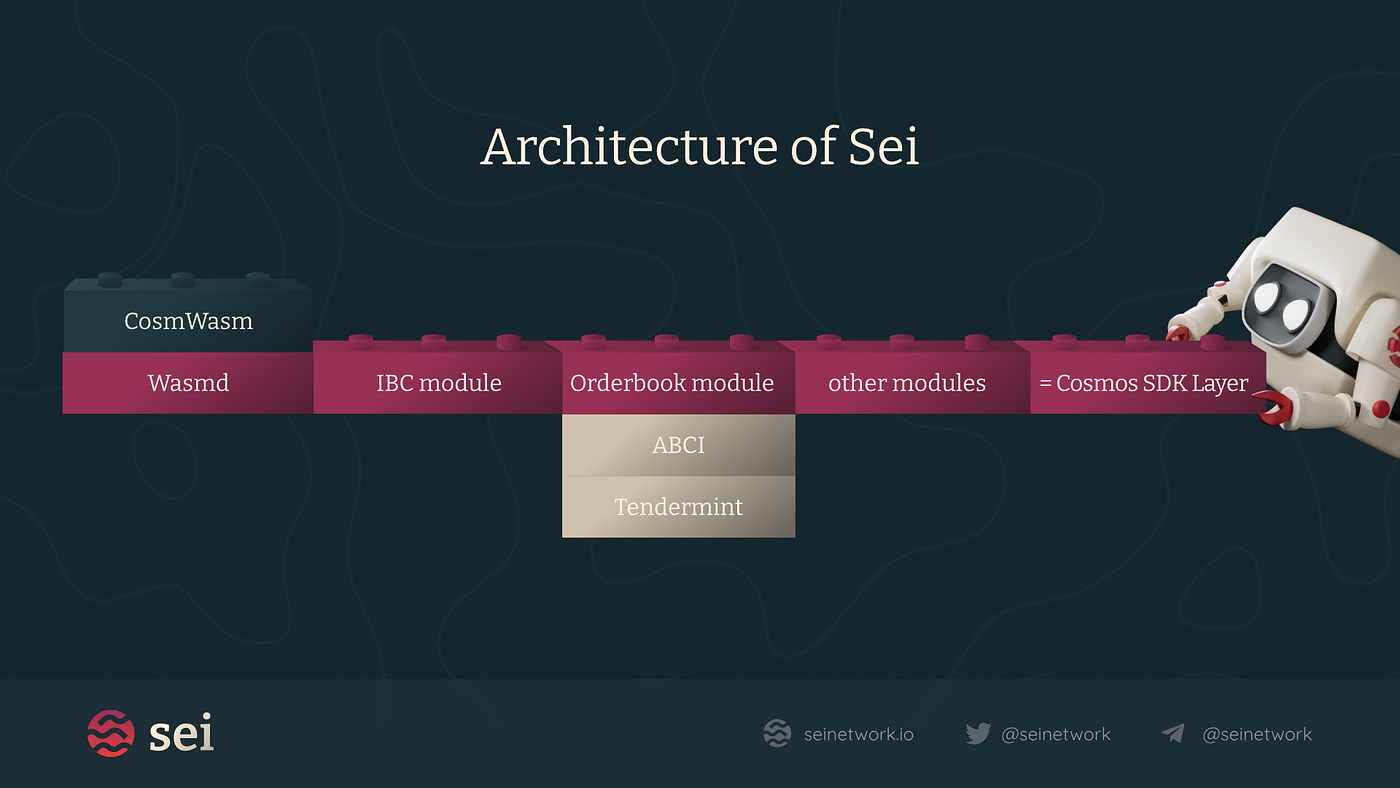
And the really nice thing is that the order book is built into the chain itself, that is — it is an L1 order book or it is an L1 chain with an integrated central limit order book. This gives us full customizability of the whole stack and opens up a whole new space for order book design. We can solve the MB problem, we can create a better user experience for market makers and users and give some small examples. Yes, I mean we are currently dealing with the fastest chain created with the Cosmos SDK in our dev net, with a block time of 600 milliseconds. In our internal testing on the test network, the block times we were able to get were closer to 300 milliseconds under ideal conditions. From an ecosystem perspective, we have more than 20 teams that are running on today’s platform, and they’re not exactly random teams. Many of them are really worthy teams from other ecosystems. In turn, our staff is growing as well, we have 18 people at the moment. The engineers are mostly from companies like Robin Hood and Databricks. Tony, for example, was the fastest to get promoted to staff engineer at Robin Hood, where he was in charge of clearing. And Phil was in charge of Kubernetes Infradata breaks before he joined us.
We also have people from Cosmos, such as Dan, who has been building the Cosmos ecosystem for a very long time. We also have people from the traditional financial industry, such as Jeff, who previously worked at Goldman Sachs and CO2.”
You’ll agree, it’s like looking into the holy of holies! But that’s not all! Dan, the man you and I talked about in the previous article, also shared his thoughts:
“When I heard more about Sei and the opportunity to build better infrastructure for Defi, I was totally on board. I had long understood the possibility of better infrastructure for DeFi.
Relying on the Solana chain when NT took off on Solana, some of the defective protocols did not get the development they could have gotten, especially when the chain became overloaded. That’s why we really want to create L1 specifically for DEFI applications, especially for the more advanced types of DeFI applications, such as derivatives, synthetic assets, and sports betting.
Companies like FTX or Finance, for example, have more advanced financial applications, and also — fit many of the types of innovations that we’ve seen in financial innovation on Wall Street and other companies, bringing them into the chain and providing more transparency. Jay mentioned what happened with GameStop earlier this year, and there was no transparency in what was going on.
And you know that in our space we watched the credit crunch that happened when TARA went under, and how it affected three-hour capital and then centralized lenders like Celsius. But we didn’t see all the details of what was going on and whether there were any backdoor deals that were going on. But we did see what was going on in the X DeFi protocols, such as Ave, as it was intended. So it’s much more fair and transparent.
So we want to be able to implement not only AMS and basic trading, but also much more advanced financial applications in DeFI. And to do that, we need DeFI infrastructure, and the creation of an L1 optimized for DeFi products.”
And it is true what they say — everything works only when all the participants in the process, the ideas, look in the same direction. In Sei Netwrok, we see a true symbiosis of different skills and abilities, which somehow leads the team in the right direction.
But — let’s go back to Jay and what he said about why the Sei Network idea is not only “viable” today, but also quite marketable:
“Basically, the product team just keeps doing different iterations of how you can take the design and make it as simple and easy for the user as possible. And options is an example of this. Options has been one of the biggest sources of revenue for Robin Hood. I don’t think it was the biggest source of volume, simply because more volume comes from stock trading, but the margin on stock trading is smaller. So if there’s one major conclusion, it’s that it should be as simple as possible. And I mean, for a trading exchange or any kind of trading interface. For example, if you look at the perpetual exchange right now, there’s so much information, you have a lot of charts. You have a lot of things like the funding rate, the amount of leverage they want to get and what direction they want to go and then just place a trade, the rest of the information will just scare them off. So I think DeFi has a lot of work to do in developing a regular product, and specifically for many of these derivatives, I don’t think we’re anywhere near seeing a Robin Hood-style approach on any trading exchange yet.